Licensed & Insured

Roofing Contractor in Garden Grove, CA: Honest Pricing, Careful Craftsmanship

In Garden Grove, roofs rarely fail all at once. They wear down slowly. Seven or eight dry months of strong Southern California sun cook asphalt shingles, harden rubber pipe boots, and turn 40-year-old felt under concrete tile brittle. Then the first big November storm finds every weak spot, and you see it as a stained ceiling or a wet attic. Garden Grove Roofing Solutions is a local roofing contractor that finds those problems before the rain does. We repair, maintain, and replace roofs on the city's mid-century homes and commercial buildings, with clear itemized pricing and work you can count on.

Most of Garden Grove's homes went up between 1953 and 1970, so we see the same patterns over and over: layered shingles over skip sheathing, dry-rotted eaves, patio covers that pond water, and tile roofs where the tiles look fine but the underlayment is shot. We work on ranch homes in West Garden Grove, condos and townhomes near Haster Basin and Twin Lakes Park, and flat-roof storefronts along the Little Saigon Bolsa Ave corridor. Every bid comes with a straight explanation of what your roof actually needs.

  • Bonded roofing contractor
  • Fully insured for your protection
  • Financing available for qualified homeowners

Garden Grove homeowners choose us because we explain what's actually wrong, price it honestly, and treat their homes with care from the first visit to the final cleanup.

Request Your Free Estimate

No obligation. Fast, honest quotes.

Your information is never shared.

Online Estimates
Onsite Service
Licensed & Insured
Customer Rated
Local Expertise

Why Garden Grove Roofs Need a Local Roofing Contractor

Garden Grove doesn't get hail or snow, so it's easy to assume roofs here last forever. They don't. Sun, wind, salt air, and decades-old construction wear roofs out quietly, and the region's short rainy season makes hidden damage show up all at once. Here's what's working against your roof.

Climate: Long Dry Spells, Intense UV, Santa Anas, and Sudden Storms

Garden Grove sits about 8–10 miles inland from the Pacific and gets roughly 13 inches of rain a year, almost all of it between November and March. That rain often comes as short, heavy storms or atmospheric rivers. Summer highs run in the high 70s to mid-80s, with heat waves past 95°F, and the strong year-round UV strips shingle granules and breaks down sealants and roof cement. Fall Santa Ana winds can gust 40–60 mph in nearby canyons. They're weaker by the time they reach the flat basin floor, but they still lift shingles and knock ridge caps loose right before the rains start. May Gray and June Gloom bring salty marine moisture that corrodes galvanized flashing and nails and feeds algae streaks on north-facing slopes. On top of that, the nearby Newport-Inglewood fault can crack tile and loosen unbraced chimneys.

Built Environment: A City of 1950s–60s Tract Homes

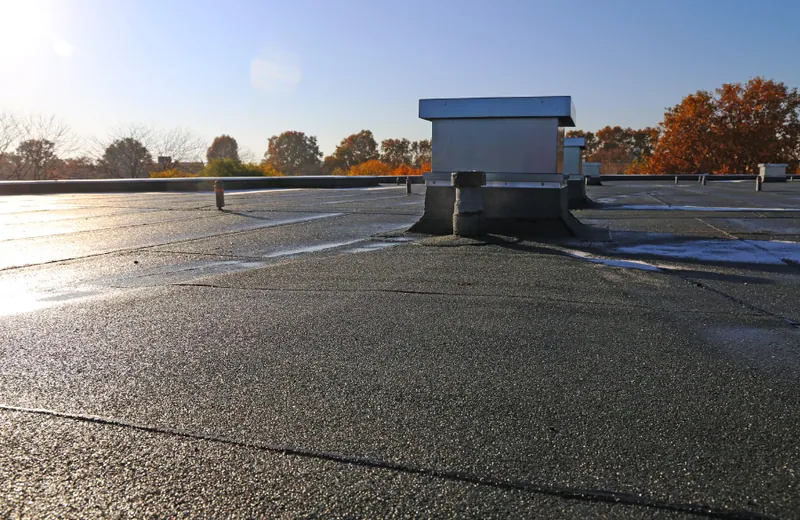
Garden Grove incorporated in 1956 after decades as strawberry, orange, and walnut farmland. Most homes are single-story ranch tracts built between 1953 and 1970, with low-slope gable or hip roofs, wide eaves, and attached garages. Many started out with wood shake and have been re-roofed two or more times since, so some still have stacked shingle layers over the original skip sheathing. Condos and townhomes from the 1970s–90s usually have concrete S or flat tile, and the underlayment beneath that tile is now 30–50 years old. Patio covers, garage conversions, and unpermitted additions with badly tied-in roof planes are some of the most common leak sources we see. Commercial buildings along Garden Grove Blvd, Brookhurst St, and Bolsa Ave mostly have flat roofs: built-up, modified bitumen, TPO, or coated systems.

Regulations: Permits, Title 24, and Contractor Protections

The City of Garden Grove Building & Safety Division requires a permit for re-roofing. Inspections typically cover sheathing and nailing when the roof is re-decked, plus a final inspection. Work has to meet the California Building and Residential Codes. Title 24 Part 6 energy rules can trigger cool-roof reflectance requirements on low-slope residential and many commercial re-roofs. Code allows no more than two roofing layers, so a home that already has two needs a full tear-off. Older built-up roofs and mastics may contain asbestos, which has to be handled under SCAQMD Rule 1403, and homes built before 1978 may have lead paint on the fascia. California law caps a home-improvement down payment at 10% of the contract or $1,000, whichever is less. Many condo HOAs also control the tile profile, the color, and when the roof gets replaced.

Homeowners Protecting a Major Asset

With roughly 170,000 residents and single-family home values generally above $800K, Garden Grove homeowners know their roof protects a big investment. Many of them bought decades ago and now live on fixed incomes, and multigenerational households are common. Insurers are also asking more questions about roof age at renewal. That's why clear itemized bids, financing options, and documentation you can give your insurance carrier matter so much here.

Know The Signs

Common Roofing Problems We See in Garden Grove

Roofs in Garden Grove mostly fail from age, UV, wind, and skipped maintenance, not from hail. Below are the problems we find most often on local homes and buildings, why they happen here, and the warning signs to watch for before the next storm.

Failed Underlayment Under Concrete Tile

Serious

The tiles on a concrete or clay tile roof mostly shed sun and wind. The felt underlayment beneath them is what actually keeps water out. When that felt dries out, cracks, or tears, water that slips past the tiles goes straight to the roof deck.

Why it happens here

Many Garden Grove condos, townhomes, and 1970s–90s infill homes still have their original felt, which is now 30–50 years old. Owners often hear that concrete tile lasts 50 years, which is true of the tile, but the felt usually gives out after 20–30. Constant UV heat bakes it brittle, and the long dry season hides the failure. Nobody notices until an atmospheric-river storm drives water through, often in several spots at once.

Signs to watch for
  • Ceiling stains after the first heavy storm of the season
  • Brittle, crumbling felt visible at tile edges or eaves
  • Cracked or slipped tiles exposing dark paper
  • Damp or rotted fascia boards at the eaves
  • Musty attic odor in winter
  • Roof over 25 years old with original underlayment
Local patterns

We see this all the time in townhome communities near Haster Basin and Twin Lakes Park and in later-built tracts in West Garden Grove. HOA-managed complexes often run into it across many buildings at once, which brings up questions about who pays and when.

Our fix

A lift-and-relay: we remove the tiles, install new synthetic or modern underlayment and flashing, replace broken tiles, and reinstall the existing ones. It costs far less than new tile.

Active Storm Leak

Emergency

Water is coming into the home or business during or right after rain. Usually a hidden weakness has finally given way under a heavy downpour, such as a cracked pipe boot, failed valley, lifted shingle, or open flashing joint.

Why it happens here

Garden Grove gets nearly all of its roughly 13 inches of rain between November and March, often in short, intense bursts. After seven or eight dry months, damage that built up quietly all summer shows up during the first big storm. Demand for tarps and repairs spikes overnight, and wet insulation and drywall can turn into mold within days if nobody deals with them.

Signs to watch for
  • Dripping water or bubbling paint on ceilings
  • Water running down interior walls
  • Wet or matted attic insulation
  • Puddles near walls or light fixtures
  • Tarp or debris blown loose in wind
Local patterns

Calls spike citywide after the first atmospheric-river storm, especially from mid-century ranch homes in Garden Grove Park, Colonial Manor, and West Grove, and from flat-roof businesses along Garden Grove Blvd and Brookhurst St.

Our fix

Emergency tarping or a temporary seal to stop the water, a photo record for insurance, and then a permanent repair scheduled once the roof is dry and safe to work on.

Santa Ana Wind Damage

Moderate

Strong offshore winds lift and crease asphalt shingles, break the sealant bond between shingle courses, knock ridge caps loose, and shift or crack concrete and clay tiles. Once that happens, wind-driven rain can get underneath.

Why it happens here

Santa Ana winds blow mostly in fall and early winter, the worst possible timing because rain usually follows within weeks. Shingles that have been baking in the sun for years lose their adhesive strip and lift more easily. Wind also drives palm fronds and debris into gutters and valleys, which clogs drainage just as the rainy season starts.

Signs to watch for
  • Shingles or ridge caps in the yard
  • Creased or flapping shingle tabs
  • Tiles visibly shifted or broken
  • Exposed nail heads or underlayment
  • Gutters packed with leaves and fronds
Local patterns

Exposed single-story roofs with wide eaves in Willowick, Eastgate, and Buena Clinton tend to catch the wind. We also find displaced ridge and hip tiles on tile-roofed townhomes after each major Santa Ana event.

Our fix

Re-securing or replacing lifted shingles and displaced tiles, resetting ridge caps, sealing exposed fasteners, and clearing gutters and valleys before the first storm.

Layered Shingles Over Skip Sheathing

Serious

An older home re-roofed by laying new shingles over old ones, sometimes on top of spaced skip sheathing originally built for wood shake. The result is a heavy roof that traps heat and has a weak nailing base.

Why it happens here

Most Garden Grove homes date to 1953–1970, and many started out with wood shake on skip sheathing. Over the decades, owners saved money with overlays. Code now allows no more than two layers, so those homes need a full tear-off and, often, new solid plywood or OSB decking before new shingles can go on. Undersized mid-century attic ventilation makes it worse by cooking the shingles from below.

Signs to watch for
  • Thick, lumpy roof edge showing multiple layers
  • Wavy or sagging roof lines
  • Shingles curling or cupping early
  • Very hot attic in summer
  • Daylight visible between attic boards
  • Insurance carrier questioning roof age
Local patterns

This is common on original ranch tracts in Garden Grove Park, Colonial Manor, Westhaven, and the Chapman Ave/Brookhurst area, where homes have gone through several owners and several re-roofs since the 1960s.

Our fix

Full tear-off down to the rafters, new solid decking over skip sheathing, upgraded ventilation, and a new permitted shingle roof system.

Ponding and Leaks on Flat or Low-Slope Sections

Moderate

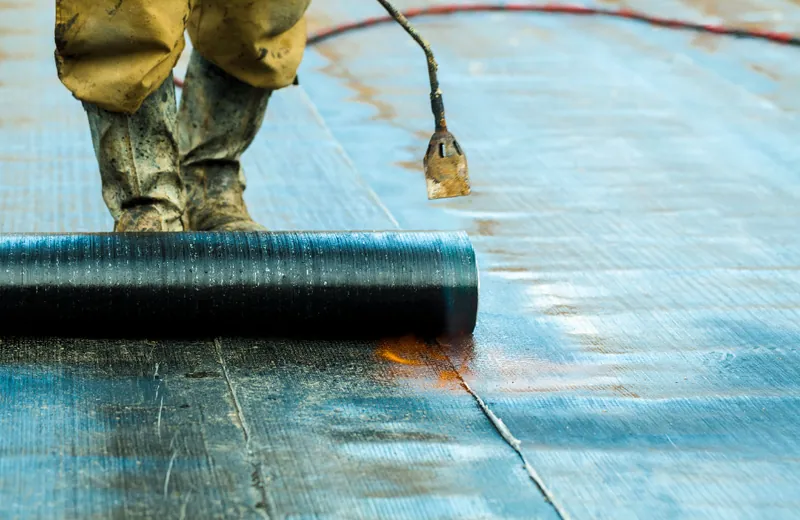
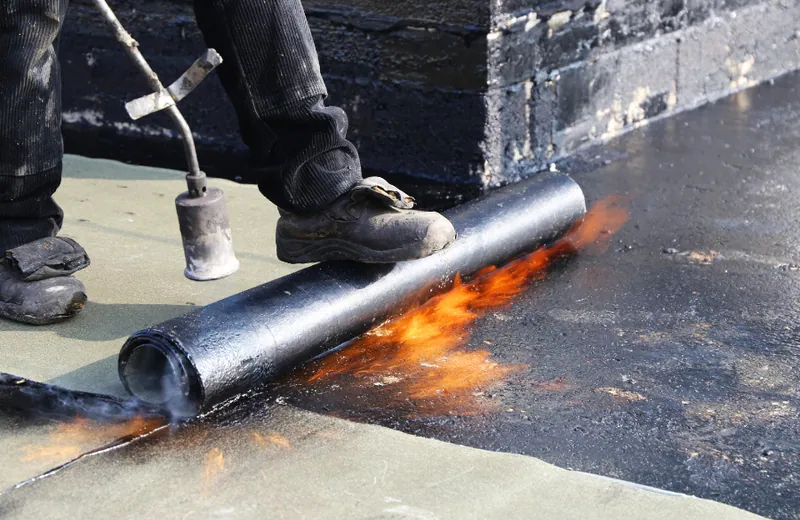
Patio covers, porches, additions, and flat commercial roofs that hold standing water. Rolled roofing, built-up tar-and-gravel, or worn coatings break down under the pooled water and UV until seams open up.

Why it happens here

Lots of Garden Grove homes added low-slope patio covers and garage conversions over the years, often unpermitted and poorly tied into the main roof. Rolled roofing on these sections rarely lasts more than 10–15 years in this sun. Commercial flat roofs along the major corridors deal with the same UV, plus clogged drains and tired elastomeric coatings.

Signs to watch for
  • Water standing 48+ hours after rain
  • Blistered or cracked roofing surface
  • Gaps where the patio roof meets the house
  • Leaks at the wall line of an addition
  • Exposed gravel bald spots on built-up roofs
Local patterns

We find failing patio covers and garage conversion tie-ins across West Garden Grove and Riverdale Park, and aging built-up and modified bitumen roofs on retail strips along Bolsa Ave and in Koreatown on Garden Grove Blvd.

Our fix

Re-roofing with modified bitumen or a single-ply cool-roof membrane, rebuilding the tie-in flashing at the main roof, and adding slope or drainage where water ponds.

Corroded Flashing and Cracked Pipe Boots

Moderate

The metal flashing at walls, chimneys, and valleys, plus the rubber boots around plumbing vents, are the joints of your roof. When they rust, crack, or pull away, water follows the gap straight inside.

Why it happens here

Salty marine air from the coast speeds up corrosion of galvanized flashing and nails, and the constant UV turns rubber pipe boots brittle within 10–15 years. Expansive clay soils in parts of the city let homes settle, which can open flashing joints at walls and chimneys. Earthquakes on the nearby Newport-Inglewood fault can loosen unbraced masonry chimneys and break their seals.

Signs to watch for
  • Rust streaks below flashing
  • Cracked or split rubber around vent pipes
  • Leaks near chimneys or skylights
  • Gaps between roof and stucco wall
  • Dried, cracked roof cement patches
Local patterns

This shows up most on mid-century homes with original masonry chimneys in Historic Main Street, Downtown, and Buena Clinton, and on older homes that have been patched with roof cement many times over.

Our fix

Replacing corroded flashing with new metal, installing UV-resistant pipe boots, re-sealing chimney and wall transitions, and recommending a chimney check where earthquake movement is suspected.

Algae Streaks and Granule Loss

Minor

Dark streaks on shingles from airborne algae, and bald patches where the protective ceramic granules have worn away. Without granules, the asphalt is exposed to direct sunlight and breaks down much faster.

Why it happens here

May Gray and June Gloom marine moisture lets algae take hold on north-facing slopes. On every slope, intense year-round UV slowly strips granules from aging shingles. It looks cosmetic at first, but heavy granule loss is a clear sign the shingle is close to the end of its life.

Signs to watch for
  • Black or dark green streaks on roof
  • Granules collecting in gutters or downspout outlets
  • Shiny, smooth bald spots on shingles
  • Faded, uneven roof color
  • Brittle shingle edges that crumble
Local patterns

We see this mostly on north-facing slopes and shaded roofs near mature trees around Garden Grove Park and the Riverdale Park area, and on 15–20-year-old composition roofs across the city.

Our fix

Inspecting how much shingle life is left, cleaning gently where appropriate, replacing damaged sections, and planning a replacement budget if granule loss is widespread.

What We Do

Roofing Services for Garden Grove Homes and Businesses

Every roof is different, but most Garden Grove projects fall into a few patterns: aging tract homes, tile roofs with tired underlayment, low-slope patio covers, and flat commercial roofs. Here's how each of our services fits those needs. We'll always tell you whether a repair will do before recommending a replacement.

Specialty

Roof Repair

We track down and fix leaks, wind damage, cracked tiles, failed flashing, broken pipe boots, and worn valleys on shingle, tile, and low-slope roofs. The goal is to stop the problem at its source, not just smear more roof cement over it.

Our approach

We trace water paths from the attic and the roof surface, then replace damaged materials with matching products. Flashing gets rebuilt with new metal instead of being patched over. You get photos of what we found and what we fixed.

In Garden Grove, CA

In Garden Grove, many leaks show up only after the first winter storm, and most of them come from pipe boots dried out by UV, corroded flashing from salty marine air, or loose ridge caps after the Santa Anas. Targeted repairs can buy years of life on a roof that's otherwise sound.

Best for

Homeowners with a specific leak, storm or wind damage, or a roof under about 15–20 years old that is still mostly in good shape.

Specialty

Roof Replacement

Complete tear-off and replacement of worn-out roofs, including layered shingle roofs, failing tile underlayment, and old wood shake. We handle permits, decking, ventilation, flashing, and cleanup from start to finish.

Our approach

We strip to the deck, replace rotted wood, and add solid sheathing over skip boards where needed. Then we install modern underlayment, new flashing, and code-compliant ventilation, and schedule the city sheathing and final inspections.

In Garden Grove, CA

Many of Garden Grove's 1950s–60s ranch homes have two roofing layers over skip sheathing, so a code-compliant tear-off is the only real option. For tile roofs, we often recommend a lift-and-relay, which reuses good tiles over new underlayment and saves thousands.

Best for

Roofs over 20–25 years old, roofs with two existing layers, widespread leaks, wood shake that insurers are flagging, or failing tile underlayment.

Roof Installation

New roof systems for additions, rebuilt structures, ADUs, and patio covers, built correctly from the deck up and tied into existing roof planes so the new section doesn't become your next leak.

Our approach

We select a fire-rated roof covering that matches the slope, then detail flashing and transitions to the existing roof. Where Title 24 applies, we pick cool-roof rated materials and coordinate with your builder and the city permit process.

In Garden Grove, CA

Garden Grove's dense lots mean many owners are adding ADUs, rebuilding garage conversions, or replacing tired patio covers. Getting the tie-in right between new and existing roofs is where most local addition leaks start, so we pay close attention to it.

Best for

Homeowners building ADUs, additions, or new patio covers, and anyone legalizing or rebuilding a poorly roofed garage conversion.

Roof Inspection

A thorough look at your roof's surface, flashing, ventilation, gutters, and attic, with a written summary and photos. You'll know what condition the roof is in, how much life it has left, and what needs attention first.

Our approach

We walk the roof where it's safe, check the underlayment at tile edges, inspect the attic for moisture and daylight, and document everything with photos you can share with family, buyers, or your insurance carrier.

In Garden Grove, CA

Garden Grove insurers increasingly ask about roof age at renewal, and homebuyers want clarity on older tract homes. An inspection before November catches dried pipe boots, wind-lifted shingles, and failing tile felt while there's still time to fix them.

Best for

Insurance renewals, home purchases or sales, owners of roofs older than 15 years, and anyone who's had a Santa Ana wind event.

Roof Maintenance

Seasonal tune-ups that keep a roof sealed and draining: gutter and valley cleaning, re-securing loose shingles and tiles, replacing worn boots and sealants, and spotting small problems early.

Our approach

We do a pre-season visit, ideally in September or October after the Santa Anas start, and clear debris, check every penetration, reset displaced tiles, and note anything to budget for. VOC-compliant coatings and sealants are used where needed.

In Garden Grove, CA

Because Garden Grove's rain arrives in a short, intense window, fall maintenance does the most good. Clearing wind-blown palm fronds and resealing UV-cracked penetrations before the first storm prevents most of the emergency calls we get each winter.

Best for

Tile and shingle roofs in good condition, rental property owners, HOAs, and seniors who'd rather not climb a ladder.

Commercial Roofing

Repair, maintenance, coating, and replacement for flat and low-slope commercial roofs: built-up, modified bitumen, TPO, and elastomeric systems on retail, office, mixed-use, and multifamily buildings.

Our approach

We do a core inspection to identify the existing layers and arrange asbestos testing on older built-up roofs where required. Then we design a Title 24 cool-roof compliant system and schedule the work around business hours.

In Garden Grove, CA

Storefronts and plazas along Bolsa Ave in Little Saigon, Koreatown on Garden Grove Blvd, and the Brookhurst corridor often have aging built-up roofs with ponding and clogged drains. Small landlords with duplexes and apartment buildings need durable re-roofs that don't blow the budget.

Best for

Small business owners, property managers, small landlords, and HOAs managing flat or low-slope roofs.

Emergency Roofing

Fast response when water is getting in: emergency tarping, temporary seals, and debris removal to protect your home or business until a permanent repair can be done safely.

Our approach

We secure the leak area, tarp and weight it properly so it holds through the wind, check the attic for wet insulation, and photograph the damage for your insurance claim before scheduling the permanent fix.

In Garden Grove, CA

When an atmospheric-river storm hits Garden Grove, half the city discovers leaks at the same time. Calling early, and keeping your tarp secured through the Santa Ana-driven gusts that sometimes come with storms, can keep damage limited to the roof.

Best for

Active leaks, storm or wind damage, fallen tree limbs, and any situation where water is coming inside right now.

Simple & Transparent

How Your Garden Grove Roofing Project Works

We keep things simple and predictable. Here's what happens from your first call to final cleanup, including the local permit and HOA steps that can trip up other contractors.

Free Consultation and Roof Assessment

  • We talk through your concerns, the roof's age, and any leak history
  • On-site inspection of the roof surface, flashing, gutters, and attic
  • Photos of problem areas so you see what we see
  • Check for multiple layers, skip sheathing, or failing tile felt

Bring family members into the conversation if you'd like. Many Garden Grove households make roofing decisions together, and we're happy to walk everyone through the findings.

Usually scheduled within a few days; same-day for active leaks

Clear, Itemized Quote

  • Line-by-line pricing for materials, labor, decking, and disposal
  • Repair vs. replacement options explained honestly
  • Financing options reviewed if you want them
  • Deposit kept within California's 10% / $1,000 limit

We flag likely extras up front, like skip-sheathing replacement on 1950s–60s homes or asbestos testing on old built-up roofs, so they don't surprise you halfway through.

Typically within 2–4 business days of the assessment

Permits, HOA Approval, and Scheduling

  • Pull the City of Garden Grove re-roof permit
  • Confirm Title 24 cool-roof requirements where they apply
  • Submit tile color and profile to your HOA if required
  • Order materials and set a start date around the weather

Condo and townhome HOAs often control the roof schedule and tile selection. We work directly with management to keep approvals moving.

Roughly 1–3 weeks depending on city and HOA review

Installation and Site Protection

  • Protect landscaping, AC units, and neighboring properties
  • Tear-off, deck repair, and solid sheathing as needed
  • Install underlayment, flashing, ventilation, and the roof covering
  • City sheathing/nailing inspection when re-decking

Garden Grove's narrow side yards and dense lots take careful dumpster placement and debris control. We plan access in advance and keep neighbors informed.

1–3 days for most homes; repairs often same-day; commercial varies

Final Inspection, Cleanup, and Walkthrough

  • Magnetic sweep for nails across the yard and driveway
  • City final inspection to close the permit
  • Walkthrough with photos of the completed work
  • Warranty paperwork and documentation for your insurer
Final day of the project, plus the city final inspection
The Garden Grove Roofing Solutions Difference

Why Garden Grove Homeowners Choose Garden Grove Roofing Solutions

We Know Garden Grove's Roofs Inside and Out

This is our hometown market, and its roofs follow patterns. Mid-century ranch homes in Garden Grove Park and Colonial Manor often hide two shingle layers over skip sheathing. Townhomes near Twin Lakes Park have tile that looks perfect over felt that's falling apart. Patio covers in West Garden Grove pond water at the tie-in. Because we've seen these issues so often, we know where to look and what to ask, and we can explain what's really happening on your roof rather than guessing.

Bonded and Insured, So You're Protected

Garden Grove has a long history of door-to-door and storm-chaser contractors who show up after the first big rain. We're bonded and insured, which protects you and your property if something goes wrong on the job. Before you hire any roofer, including us, we encourage you to verify their license on the California CSLB website and ask for proof of insurance. A legitimate contractor will hand it over without hesitation.

Honest Pricing With Itemized Bids

Garden Grove homeowners compare bids, and they should. Our quotes break out materials, labor, decking, disposal, and permit costs line by line, so you can compare apples to apples. If a repair will solve the problem, we'll say so instead of pushing a full replacement. Our deposits stay within California's legal limit of 10% of the contract or $1,000, whichever is less, and we explain likely add-ons, like replacing skip sheathing, before work starts.

Specialists in Tile, Shingle, and Low-Slope Systems

One roof can include concrete tile on the main house, rolled roofing on the patio, and a garage conversion tied in at an awkward angle. We work on all of it, including lift-and-relay underlayment replacement on tile roofs, full shingle tear-offs, modified bitumen and single-ply membranes, and commercial flat roofs. That range matters in Garden Grove, where most leaks start where two roof types or two eras of construction meet.

Financing That Fits Real Budgets

Many Garden Grove owners have significant home equity but tighter monthly cash flow, especially longtime residents on fixed incomes and multigenerational households. Financing is available, so you don't have to put off a failing roof until it causes interior damage. We'll walk through options when we review your quote and help you compare the cost of acting now with the cost of waiting through another rainy season.

Permits, Code, and HOA Handled for You

Re-roofing in Garden Grove means a city permit, inspections, Title 24 cool-roof rules on many low-slope and commercial jobs, a two-layer limit, and sometimes asbestos testing on old built-up roofs under SCAQMD Rule 1403. Condo HOAs add their own approvals for tile color and profile. We take care of the paperwork and coordination so your roof passes inspection the first time and your HOA signs off without delays.

Fast Emergency Response When Storms Hit

When an atmospheric river rolls through Orange County, the whole city starts calling roofers on the same day. Emergency roofing is one of our core services. We tarp and secure active leaks, check the attic for wet insulation, and document damage for your insurance claim. Then we schedule the permanent repair once the weather clears, so you aren't stuck with a temporary fix for months.

Trusted Locally

A Garden Grove Roofer You Can Trust

Garden Grove homeowners choose us because we explain what's actually wrong, price it honestly, and treat their homes with care from the first visit to the final cleanup.

20 mi
Service Radius Around Garden Grove
$0
Cost for an Itemized Quote
7
Roofing Services Under One Roof
Bonded & Insured
Protection on Every Job
BondedInsuredFinancing available
Where We Work

Garden Grove Neighborhoods We Serve

We're based in Garden Grove and serve every corner of the city, from the Little Saigon corridor to the Resort District, plus surrounding communities within about 20 miles. Each neighborhood has its own building stock and roofing quirks, and we know them well.

West Garden Grove and Little Saigon

Little Saigon (Bolsa Ave / Brookhurst corridor)West Garden GroveWest GroveWesthaven areaWillowick

Central Garden Grove and Downtown

Historic Main Street / DowntownKoreatown (Garden Grove Blvd)Garden Grove Park areaChapman Ave / Brookhurst areaBuena Clinton

East Garden Grove and Resort District

Garden Grove Resort District (Harbor Blvd)EastgateColonial ManorRiverdale Park areaHaster Basin / Twin Lakes Park area

We serve all of Garden Grove and properties within a 20-mile radius. If you're not sure whether we cover your address, call or reach out through our contact page and we'll confirm. Not sure if we cover your area? Call (714) 970-4441.

Transparent Pricing

How Much Does a Roof Cost in Garden Grove?

Roofing costs in Garden Grove depend on your roof's size, material, and what's hiding under the current layers. Here are the factors that matter most and realistic local price ranges, so you can plan with confidence before you get your free quote.

Primary Factor

Roof Material and System

Asphalt architectural shingles are the most budget-friendly full replacement. A tile lift-and-relay reuses your existing concrete tile over new underlayment, which usually costs less than brand-new tile. New concrete or clay tile costs more, and low-slope membranes like modified bitumen or TPO fall in their own range. Title 24 cool-roof rated products can add modestly to material cost on low-slope sections but help cut summer cooling bills.

Primary Factor

Tear-Off Layers and Decking

Many Garden Grove homes from the 1950s–60s have two roofing layers, which means a mandatory full tear-off and more disposal weight. If skip sheathing from an original wood shake roof is underneath, solid plywood or OSB has to go over it before new shingles can be installed. Dry rot at the eaves and fascia, common after decades of sun and winter leaks, adds carpentry costs.

Secondary Factor

Roof Size, Pitch, and Complexity

Most single-story ranch homes here have simple, low-pitch gable or hip roofs, which keeps labor reasonable. Costs go up with extra valleys, dormers, skylights, chimneys, and multiple tie-ins from additions or garage conversions. Each penetration and transition needs flashing, and those details are where both cost and long-term leak protection are decided.

Secondary Factor

Permits, Testing, and Compliance

A City of Garden Grove re-roof permit is required, and older built-up roofs or mastics may need asbestos testing, plus abatement under SCAQMD Rule 1403 if results come back positive. Pre-1978 homes may need lead-safe practices at the fascia. HOA material requirements can also limit product choices. We include known permit and compliance costs in your quote.

Minor Factor

Access and Site Logistics

Narrow side yards, dense lots, landscaping, and shared walls on townhomes affect how quickly crews can tear off and haul away debris. Dumpster placement on tight streets and protecting neighboring properties take extra planning and sometimes extra labor. Commercial jobs may need after-hours scheduling to keep businesses open.

Typical projectDetailsEstimated range
Leak repair after a winter stormSingle-story ranch home, cracked pipe boot and corroded wall flashing, minor decking repair$450 – $1,800
Asphalt shingle roof replacementAbout 1,600 sq ft 1960s ranch home, two-layer tear-off, solid sheathing over skip boards, new ventilation$15,000 – $26,000
Tile lift-and-relay (underlayment replacement)About 1,800 sq ft concrete tile roof, new underlayment and flashing, replace broken tiles, reinstall existing tile$17,000 – $32,000
Patio cover or low-slope section re-roof300–500 sq ft rolled roofing replaced with cool-roof modified bitumen, rebuilt tie-in flashing at the main house$3,000 – $7,500

Financing is available for qualified homeowners, so you can replace a failing roof now and spread the cost over manageable monthly payments instead of waiting for the next storm. With Garden Grove home values generally above $800K, a new or properly repaired roof protects your biggest asset, helps you keep your insurance coverage, and prevents the drywall, insulation, and mold costs that come with ignored leaks.

Questions & Answers

Garden Grove Roofing FAQs

How much does a new roof cost in Garden Grove?

Most asphalt shingle replacements on a typical 1,600 sq ft Garden Grove ranch home run about $15,000–$26,000. Tile lift-and-relay projects usually fall between $17,000 and $32,000. The biggest swing factors are how many layers come off, whether skip sheathing needs solid decking, how much dry rot is found at the eaves, and how complex the roof is. Smaller leak repairs often cost $450–$1,800. We give free, itemized quotes so you can see exactly where your money goes, and financing is available if you'd rather spread out the cost.

My tile roof looks fine. Why would it be leaking?

Because the tile isn't what keeps the water out. Concrete tile can last 50 years or more, but the felt underlayment beneath it usually fails after 20–30 years in Garden Grove's heat and UV. Many local townhomes and 1970s–90s homes still have their original felt, which is now brittle and cracking. Water slips past the tiles during heavy storms and goes straight through the worn felt. The fix is usually a lift-and-relay: we remove the tiles, install new underlayment and flashing, and put the good tiles back. That costs much less than buying new tile.

Do I need a permit to replace my roof in Garden Grove?

Yes. The City of Garden Grove Building & Safety Division requires a building permit for re-roofing. Inspections typically include a sheathing and nailing inspection when the roof is re-decked, and a final inspection. The work has to meet the California Building and Residential Codes, and Title 24 cool-roof rules may apply to low-slope residential sections and many commercial roofs. Code also allows no more than two layers of roofing. We pull the permit, schedule inspections, and make sure everything is documented. Unpermitted roofs can cause trouble when you sell or file an insurance claim.

How long does a roof replacement take?

The actual installation on most single-story Garden Grove homes takes 1–3 days. Larger homes, tile lift-and-relay projects, or roofs needing extensive decking repair can take a bit longer. Before work starts, allow roughly 1–3 weeks for the quote, permit, material ordering, and any HOA approvals. Condo and townhome HOAs sometimes take longer to approve tile color and profile. Repairs are often done in a single visit. We schedule replacements around the forecast and won't leave your roof open with rain on the way.

When should I repair versus replace my roof?

Repair makes sense when the damage is limited, like a cracked pipe boot, a few wind-lifted shingles, or one failed flashing area, and the rest of the roof still has life left. Replacement makes more sense when an asphalt roof is past 20–25 years old, granule loss is widespread, there are leaks in multiple spots, the roof already has two layers, or your insurer is pushing back on its age. For tile roofs, the real question is usually underlayment replacement, not new tile. We'll give you an honest recommendation and show you the photos behind it.

When is the best time to deal with roof problems in Garden Grove?

Late summer through October is ideal. Garden Grove gets almost all of its rain between November and March, and the Santa Ana winds that loosen shingles and tiles usually blow in fall. Scheduling an inspection or repair before the first storm gets you ahead of the winter rush, when everyone needs a tarp at once. That said, if you already see ceiling stains, wet insulation, or missing shingles, don't wait. Small leaks turn into drywall, insulation, and mold damage fast once the rains start.

How can I prevent roof leaks between rainy seasons?

Have a pre-season tune-up each fall. Clear gutters and valleys of palm fronds and debris, replace UV-cracked pipe boots, reseal flashing, and re-secure any shingles, ridge caps, or tiles moved by the Santa Ana winds. Trim tree limbs that overhang the roof, check the attic for daylight or damp spots, and make sure attic vents aren't blocked, since poor ventilation bakes shingles from below. Watch north-facing slopes for algae, and watch your gutters for granules. Regular maintenance is the cheapest way to get the most years out of your roof.

How do I know I'm hiring a legitimate roofing contractor?

Ask for proof of bonding and insurance, and verify the contractor's license on the California CSLB website before you sign anything. Be cautious with door-to-door roofers who show up after storms. Garden Grove has seen its share of storm chasers. California law caps a home-improvement down payment at 10% of the contract price or $1,000, whichever is less, so anyone demanding a big upfront payment is a red flag. Garden Grove Roofing Solutions is bonded and insured, provides written itemized quotes, and keeps deposits within the legal limit.

Find Us

Serving Garden Grove, CA & Nearby

12002 Morgan Ln, Garden Grove, CA, 92840

Ready When You Are

Get Your Garden Grove Roof Ready Before the Next Storm

Whether you're dealing with an active leak, an aging tile roof, or an insurance renewal asking about your roof's age, let's talk it through. We'll give you an honest assessment and a clear, itemized free quote.

  • Free on-site assessment and itemized quote
  • Honest repair-versus-replace recommendations
  • Photo documentation for your records and insurer
  • Permits, inspections, and HOA coordination handled
  • Bonded and insured crew that respects your home
  • Financing available for qualified homeowners
  • Thorough cleanup and final walkthrough

Serving all Garden Grove neighborhoods, from Little Saigon and West Garden Grove to Downtown and the Resort District, plus properties within a 20-mile radius.

Water coming through the ceiling right now? Call us for emergency roofing and tarping to stop the damage fast.

Bonded · Insured

Garden Grove Roofing Solutions Free estimates across Garden Grove, CA